

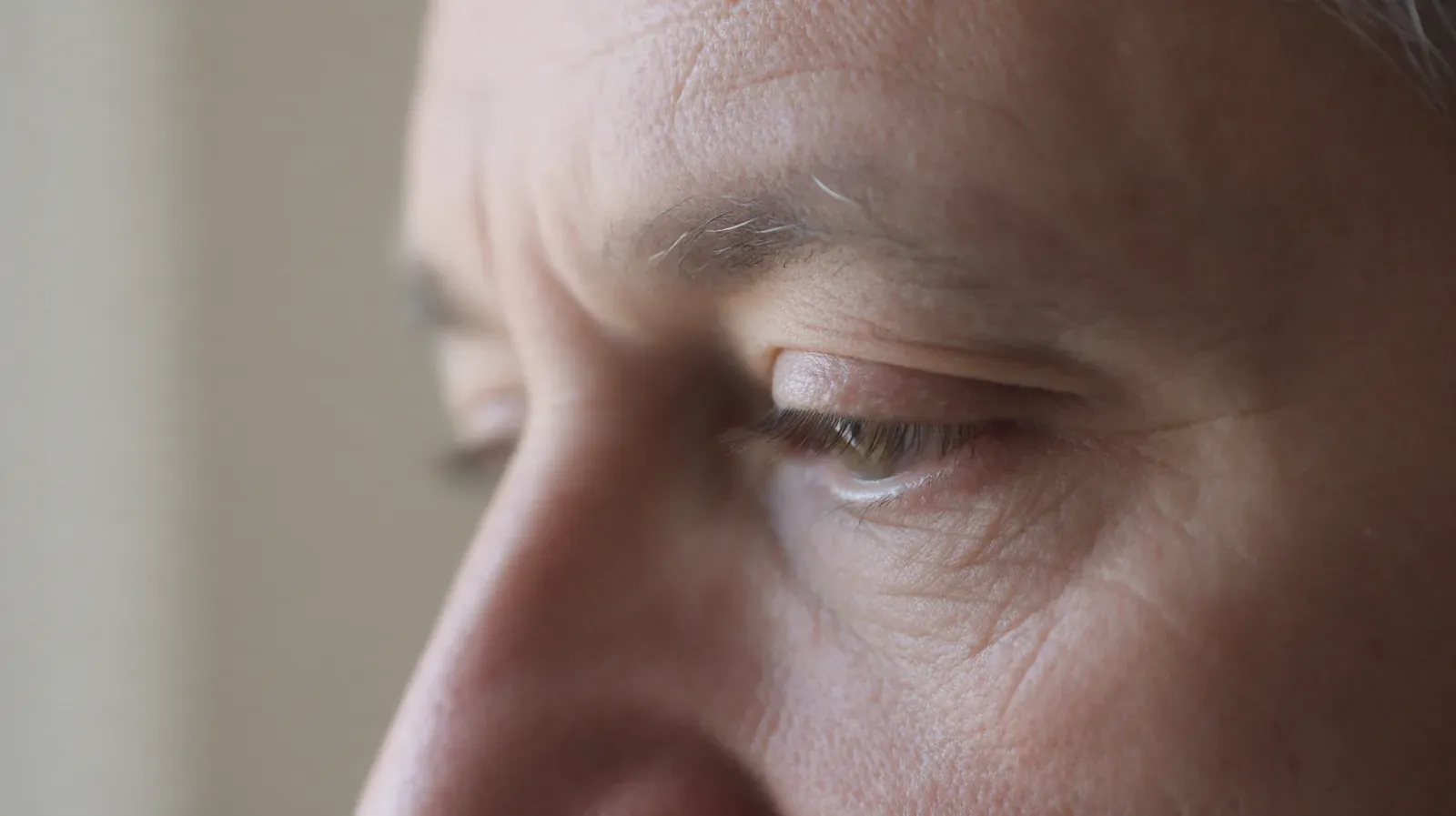
Dr. Gustavo Suárez · The doctor’s blog
Drooping eyelids: excess skin, a lowered brow or ptosis
Drooping eyelids can reflect excess skin, a lowered eyebrow or ptosis. How the causes differ, treatment options and when to seek urgent advice.
Written by Dr. Gustavo Suárez · Reviewed by Dr. Gustavo Suárez on
Read the article Read the articleAn upper eyelid that looks droopy can have three different causes: excess skin on the eyelid, an eyebrow that has descended and pulls the eyelid down with it, or ptosis, in which the eyelid itself droops because the muscle that lifts it no longer supports it in the same way. They can occur together. Each cause is treated differently: upper blepharoplasty removes excess skin, a brow lift raises the eyebrow, and ptosis requires treatment of the eyelid muscle. The first step is therefore to identify your cause.
Why do eyelids droop?
Is there excess skin on the eyelid?
EyeWiki, the American Academy of Ophthalmology’s (AAO) medical encyclopaedia, calls loose, redundant eyelid skin dermatochalasis and identifies ageing as a common cause. It is often accompanied by protruding fat. When this tissue hangs over the eye, it can reduce peripheral vision.
Has the eyebrow descended?
Two different situations bring people to the clinic with the same phrase: “my eyelids feel heavy”. One is excess upper eyelid skin. The other is an eyebrow that has descended and pulls the eyelid down with it. A drooping eyebrow also changes facial expression and may make someone look angry or tired. EyeWiki emphasises the need to look at the eyebrow’s position and shape to distinguish the two.
Is it ptosis?
In ptosis, the upper eyelid droops over the eye. The AAO explains that in adults this usually happens because the levator muscle, which lifts the eyelid, stretches or separates from the eyelid, due to age or an injury to the eye. It sometimes occurs after certain eye operations and, rarely, because of diseases or tumours affecting that muscle. Cleveland Clinic adds that in other cases the cause is damage to the nerves controlling the eyelid. Ptosis may restrict or block vision.
How are the causes distinguished?
They look similar, so examination is needed. Eyelid assessment is not limited to the skin: it distinguishes excess skin from a descended eyebrow, because the solution differs, and checks whether the eyelid itself is drooping.
The consultation also reviews vision and tear production, ophthalmic history, medication, allergies and smoking. Attention is paid to risk factors such as thyroid disorders, ocular dryness, hypertension, diabetes or glaucoma, and a history of dry eye or retinal detachment.
If excess skin interferes with vision, EyeWiki describes how this is documented: with a visual field test, with the eyelid in its usual position and lifted.

Which treatment corresponds to each cause?
If there is excess skin, upper blepharoplasty removes it and, when examination indicates it, also fat and muscle. The incision is placed in the natural eyelid crease, concealing the scar. When excess skin interferes with vision, the procedure can improve the visual field. It does not remove facial wrinkles or correct a drooping eyebrow, as SECPRE also notes.
If the eyebrow has descended, a brow lift raises it and reshapes its position and form. It does not change the shape of the eye or treat eyelid bags. It is often considered alongside upper blepharoplasty.
If it is ptosis, the approach changes. Upper blepharoplasty alone does not correct every cause of drooping eyelids, and ptosis is one of them. The AAO and Cleveland Clinic describe surgery that acts on the levator muscle: it is tightened and, in more pronounced ptosis, may be shortened and reattached to the eyelid. It needs its own assessment.
When does a drooping eyelid require urgent assessment?
When it appears suddenly. Cleveland Clinic advises seeing an eye specialist if an eyelid suddenly starts to droop or close, and seeking advice for any double vision or pain.
There is a combination worth knowing: a drooping eyelid on one side, a smaller pupil in that eye and reduced sweating on that half of the face. These are the signs of Horner syndrome, and Cleveland Clinic recommends seeing a doctor as soon as possible. In these cases, do not wait for a facial surgery appointment: see your doctor or attend an emergency department.
What are the risks of upper blepharoplasty?
Swelling and bruising gradually ease during recovery. Temporary blurred vision and dry eye are also assessed. Possible complications include infection, bleeding, prolonged oedema, difficulty closing the eyelids completely, asymmetric healing and, exceptionally, changes in or loss of vision. The result may not be as expected and may require another procedure.
These complications are exceptional. At the consultation, following medical assessment, risks are explained individually according to each patient’s characteristics. A brow lift has its own risks, detailed on its page.

Frequently asked questions
Frequently asked questions
Can drooping eyelids be treated without surgery?
It depends on the cause. The term “non-surgical blepharoplasty” groups together non-surgical eyelid skin treatments: these are different procedures from surgery and do not replace it. Some causes, such as ptosis, need their own assessment at the consultation before any treatment is discussed.
Can the eyelid and eyebrow be operated on together?
Yes. Upper blepharoplasty and a brow lift are often considered together. Examination determines whether both are needed.
Is there a scar after upper blepharoplasty?
The incision is placed in the natural upper eyelid crease, which helps conceal the scar. Once swelling subsides, the scar continues to change for some time.
How long does recovery take?
It varies between people. Discomfort settles with medication, swelling and bruising gradually decrease, and returning to reading, contact lenses, work and exercise is gradual, according to progress. The appearance in the first few days is not the final result.
Can Botox cause an eyelid to droop?
It can happen temporarily. Undesirable effects of botulinum toxin include temporary drooping of the eyelid or eyebrow and asymmetries.
A consultation to understand what is happening
If your eyelids feel heavy, the initial consultation helps establish why: skin, eyebrow, eyelid or a combination. It consists of a conversation and an examination. You do not need to arrive with a treatment chosen, and the decision need not be made that day.
Dr. Gustavo Suárez sees patients at LĀR CLINIC, Carrer del Mestre Nicolau, 19, 6th floor, Suite 1, Sarrià-Sant Gervasi (Barcelona), in Spanish and English.
Keep reading
Eye bags: why they appear and when surgery is considered
Eye bags mainly appear with age: the tissues around the eye lose firmness and the fat that protects it moves towards the lower eyelid. Lack of sleep, allergies, smoking, salt or family inheritance can make them more visible. When the bag is caused by fat and excess skin, the surgery that treats it is lower blepharoplasty. If what you see in the mirror is a hollow under the eye or dark discolouration, the approach is different.
Prominent ears: why they occur and how they are corrected at each age
Prominent ears stand out from the head more than usual. Typically, the antihelix is insufficiently folded (the fold running through the ear inside its outer rim), the concha is deeper than usual, or both. In a newborn, there is a non-surgical option, ear moulding, which works best the earlier it begins within the first weeks of life. After that stage, correction is by otoplasty: in selected children it is considered from age 6 or 7, and adolescents and adults can also have surgery.

Difficulty breathing through the nose: septum, turbinates and other causes
Difficulty breathing through the nose: a deviated septum, turbinates, nasal valves and other causes. Assessment, treatments and their limits.
Further reading
More
information.
Back to the blog
More articles to prepare for your consultation.
Request a consultation
Contact Dr. Gustavo Suárez.
Sources of information
This article provides general information and does not replace an individual medical assessment.